Strong individuals do not
automatically make a strong team.
A team can contain highly capable people and still underperform collectively. Priorities compete. Decisions do not stick. Important conversations happen outside the room. And under pressure, collaboration can disappear when it matters most.
- The core idea
- Individual capability does not automatically become collective performance.
- Where it sits
- A team performs through what happens between its members.
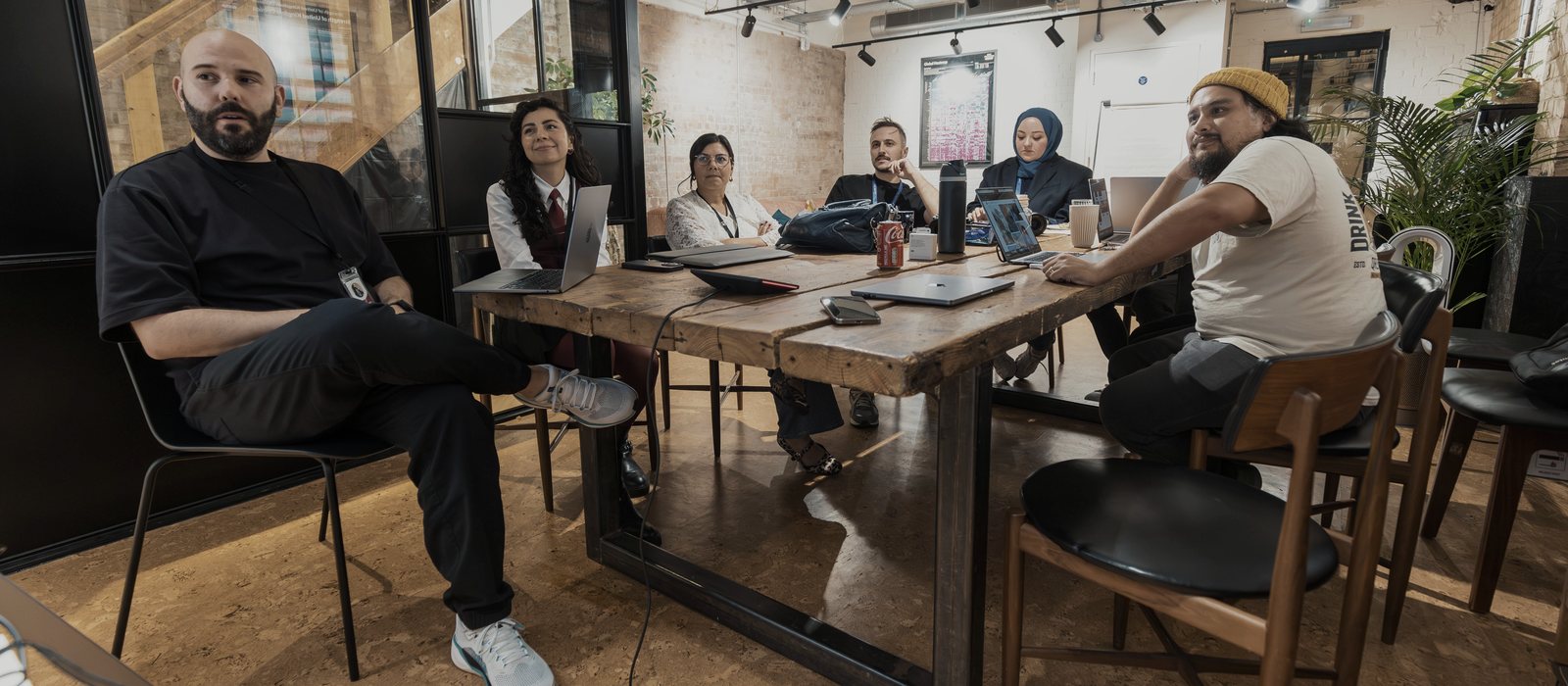
The collective performance gap
Teams can underperform even when the people are highly capable.
The gap often sits in how they work together.
How priorities are understood. How decisions are made and followed through. How information is shared. How differences are handled. Whether people challenge one another in the room or disagree afterwards. Whether accountability is genuinely shared.
A team can look functional while operating well below its collective potential.
A strong team is not simply a collection of strong individuals. It is a group capable of turning individual strengths into collective performance.
What teams need to get right
High performance depends on more than getting along.
Direction
What are we here to achieve together?
Create clarity around shared purpose, priorities and outcomes. Strong teams understand not only what each member owns, but what the group is collectively accountable for.
Discipline
How do we turn agreement into execution?
Clarify roles, decision rights, meeting practices, routines and accountability. Decisions need to hold. Responsibilities need to be clear. Follow-through needs to happen.
Collaboration
How do we get the best from one another?
Build the trust, understanding and adaptability required to use different personalities, perspectives and strengths productively. People do not need to become alike. They need to understand their impact, recognise what others need and adapt when it matters.
Courage
What must we be willing to say and do when it gets difficult?
Challenge assumptions. Raise difficult issues. Give honest feedback. Disagree constructively. Make tough decisions. Address underperformance. Hold one another accountable.
Psychological safety should make challenge possible, not make challenge unnecessary. The strongest teams are safe enough for honesty and courageous enough to use it.
Culture in practice
Culture becomes real in how people work.
Every team develops patterns — how decisions are made, what gets discussed, what remains unsaid, which behaviours are reinforced and what gets tolerated.
TNC helps teams define the culture and ways of working they need, translate them into observable behaviours and practical working principles, and make them part of everyday work.
Culture is not what an organisation says it values. It is what becomes normal.
IDI — Interpersonal Dynamics Inventory
Understanding your impact on others.
Better teamwork requires understanding not only your own intentions, but how other people actually experience you. TNC is licensed to use IDI, both as a standalone programme and within team, leadership and commercial development.
How I see myself
How I perceive my own behaviour.
How others experience me
How people I work with perceive my behaviour in my role.
How adaptable they find me
The extent to which they experience me adjusting my behaviour to different people and situations.
Self-awareness becomes valuable when it changes how you work with other people.
Team performance in the work
Insight can begin in a workshop. Team performance has to change in the work.
We begin by understanding what the team needs to achieve and what is getting in the way. For one team, the priority may be direction or decision discipline. For another, interpersonal dynamics, psychological safety, culture, accountability or performance under pressure.
We observe real team meetings, facilitate important conversations, give direct feedback and coach teams over time as new behaviours and working practices are applied.
Sometimes the team needs a workshop. Sometimes it needs someone in the room when the real work happens.
Senior leadership teams
A leadership team does more than work well together. It leads the organisation together.
Senior teams require the same foundations of Direction, Discipline, Collaboration and Courage — but the stakes are greater.
They must also anticipate what is coming, make enterprise-level trade-offs, lead across organisational boundaries, mobilise strategic change and sustain organisational momentum.
Senior teams need enough trust to challenge directly and enough collective accountability to address underperformance rather than work around it.
Strong functional leaders do not automatically become a strong enterprise leadership team. No polite underperformance.
Client perspective
Through their engaging and practical approach, we have seen clear development in both individual skills and internal collaboration. TrueNorth does not simply deliver courses — they create real value by combining theory with concrete tools that can be applied in everyday work.
What stronger team performance makes possible
Turn individual capability into collective performance.
- Create greater alignment — build shared understanding of what matters and what the team is collectively accountable for
- Build trust and productive challenge — use differences productively and address difficult issues directly
- Improve decisions and execution — strengthen how the team decides, follows through and holds itself accountable
- Adapt and perform under pressure — respond to change, maintain momentum and keep working effectively when circumstances become more demanding
A team should create more value together than its members can create apart.
Align on what matters. Turn decisions into action. Use differences productively. Challenge honestly.
Discuss your team challenge